


From London to Jerusalem
- Jul 3, 2018
- 3 min read

On a beautiful hot June day, the cool of an ancient church was very welcoming. My visit with the Worshipful Company ladies to Temple Church and Middle Temple Hall in the City of London was fascinating and interesting in more ways than one. The church was built by the Knights Templar in 1170. The Knights had taken a vow of poverty but became the richest church in England due to the fact that the Crusaders, on their way to the Holy land, deposited the deeds to their properties and their money with the Knights. This also led to law firms flourishing in this part of the city, taking care of the Crusaders' deeds and property rights.

The Church with its round dome, designed to recreate the church of the Holy Sepulchre in Jerusalem, was the first church west of Pudding Lane to survive the Great Fire of London in 1666. This was solely due to James II's decision to blow up the buildings in between the fire and the church to stop it spreading.
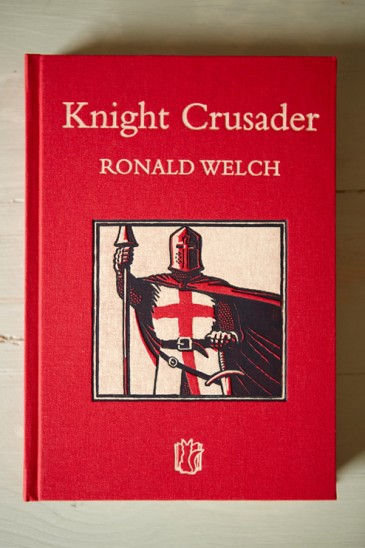
The Crusades is a fascinating time in history and I knew very little about it until I taught history to Year 7 a few years ago. It kindled my interest and one thing and another led me to a brilliant book for children: Knight Crusader by Ronald Welch. This is the first in a long series of books featuring the Carey family from the Crusades until World War II. Although written in the 1950s they are as fresh and accessible to young readers today as then and I highly recommend them. They have been republished in a beautiful collectable edition by the small publisher Slightly Foxed, about whom more another time.
The Knights Templar remained loyal to King John and early drafts of the Magna Carta are preserved at Temple Church.

Stepping into the Temple area and approaching Middle Temple Hall is like stepping back in time. The cobbled shady streets are busy with people going about their business but little trace of the 21st century can be seen. One of the four ancient Inns of Court, Middle Temple Hall was completed around 1570 and remains virtually unchanged to this day. Its history pedigree is superb: the first performance of Shakespeare's Twelfth Night was performed here in 1602. Five members of the Hall signed the American Declaration of Independence, Drake & Ralegh were frequent visitors and every monarch since it was built has dined here. At the dinners, an old oak table is moved into the centre of the hall to welcome new barristers - the table is called the "bar", hence the phrase "called to the bar".

Of course, one of my highlights was the library which contains 250,000 volumes covering the whole range of British, Irish, EU and US legal resources. It also provides access to over 9000 early printed books, 300 manuscripts and is home to the Molyneux Globes, made in 1592. These are the first globes made in England, and the master creator, Emery Molyneux, was assisted in compiling the information for the terrestrial globe by Sir Walter Ralegh amongst others. Given that the globes are made of paper and flour paste they have survived remarkably well. They were sent away for storage during World War II and returned to London in 1945.

The library is noted for having the largest holdings of John Donne's own personal library. The first on the site was described by Henry VIII as "a simple library in which were not many bookes beside the law" but in 1641 the barrister Robert Ashley donated his own personal library of over 3700 volumes. The library has developed over the centuries and is now contained in the beautiful new building (left) opened in 1958. A computer system was introduced in 1989 and a new online catalogue was introduced in 2014.
What a lovely way to spend a summer Tuesday afternoon!
Comments