


Quests and other Journeys
- Jan 8, 2019
- 5 min read
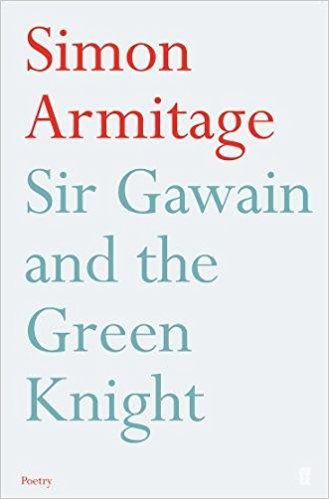
Just before Christmas I was listening to Melvin Bragg's In our Time on Radio 4, the subject of which was the poem Sir Gawain and the Green Knight, the poem of the knight who interrupts King Arthur's Christmas celebrations, challenging someone to chop off his head if he can do the same in return! This reminded me that I have long meant to read it but it has sat on my shelf for many years. What better way to spend long winter afternoons I thought and a treat was really in store. This has led over the Christmas and New Year holiday to browsing my bookshelves for other Quests which seems a good topic to start a new year. Whether your quest is travel to foreign lands or just a journey within the pages of a book, winter is a good time to lose yourself in reading and planning.

The Radio 4 programme (https://www.bbc.co.uk/programmes/m0001kr8) discussed various translations of the poem but a favourite, and certainly mine, is that by Simon Armitage, who has kept the wonderful alliteration of the original. You really do have to read it aloud! Here is a taste from the early part of the poem:
It was Christmas at Camelot - King Arthur's Court
where the great and the good of the land had gathered,
all the righteous lords of the ranks of the Round Table
quite properly carousing and revelling in pleasure.
Time after time, in tournaments of joust,
they had lunged at each other with levelled lances
then returned to the castle to carry on their carolling,
for the feasting lasted a full fortnight and one day,
with more food and drink than a fellow could dream of.
The hubbub of their humour was heavenly to hear:
pleasant dialogue by day and dancing after dusk,
so the house and its hall were lit with happiness
and lords and ladies were luminous with joy.
We know nothing about the author of the poem which was probably written around 1400. In the early 17th century the manuscript was recorded as belonging to a Yorkshireman, Henry Saville of Bank. It was then acquired by Sir Robert Cotton, whose collection also included the Lindisfarne Gospels and the only surviving manuscript of Beowulf. Rediscovered only 200 years ago it was published for the first time in 1839. It is now considered not only a most brilliant example of Middle English poetry but one of the jewels in the crown of English Literature, and it sits in the British Library under conditions of high security and controlled humidity.
Although this seems a difficult poem at first, if read aloud it is a brilliant story and will be enjoyed by adults and older children alike, as will my following recommendations.

One of the best and best-known stories on this theme is Homer's Odyssey. His Iliad told the story of the Trojan War but it is the Odyssey with its fantastic journey and characters that caught my imagination when I first read it. It recounts the story of Odysseus' return to Ithaca from the Trojan War, hounded by the wrathful sea-god Poseidon, encounters with the ferocious Cyclops and further escapes from danger, before being reunited with his faithful wife Penelope. There are many translations and children's versions and this is a story that even quite young children will love. I would particularly recommend the beautiful version by Gillian Cross, illustrated by Neil Packer. Gillian Cross is an excellent, Carnegie medal-winning, children's author and brings the story to life for children.
Another favourite of mine is The Snow Queen by Hans Christian Andersen which tells the story of young Gerda's quest to rescue her playmate Kay who has been kidnapped by the evil Snow Queen. It is entrancing, magical and truly timeless:

"She was ice, dazzling shimmering ice.
Her eyes glittered like stars,
without tenderness or warmth.
She nodded at the boy and beckoned him to come near ..."
I am fortunate to possess the most beautiful edition published by Templar and illustrated by Vladyslav Yerko but there are many equally lovely editions available. For all those children who love the Disney film Frozen this is a must. Though the plot differs somewhat it is clearly based on Andersen's classic story and one all children will love.
Many of you will know the spell-binding A Monster Calls by Patrick Ness from an idea by Siobhan Dowd. An equally awe-inspiring film followed the book truthfully which tells of the journey young Conor takes through stories to understand his mother's illness and death. The story stands alone but is much enhanced by Jim Kay's illustrations for which he won the Kate Greenaway Award for Illustration. The atmosphere draws you in from the beginning with a great first line: "The monster showed up just after midnight. As they do."

Conor finds a most unlikely ally when the Monster, an ancient yew tree, appears at his bedroom window one night. Ancient, wild, and relentless, the Monster guides Conor on a journey of courage, faith, and truth that powerfully fuses imagination and reality. This book will probably make you weep but will be loved by anyone over 12 or so.
Another book for young and not so young adults is Neil Gaiman's The Sleeper and the Spindle, a wonderful take on Sleeping Beauty and fabulously illustrated by the current Children's Laureate Chris Riddell and with a beautiful book jacket. Chris dedicated the book to "my daughter Katy, on the beginning of her quest". It is a picture book to treasure:

You may think you know this story. There's a young queen, about to be married. There are some good, brave, hardy dwarfs, a castle, shrouded in thorns; and a princess, cursed by a witch, so rumour has it, to sleep forever. But no one is waiting for a noble prince to appear on his trusty steed here. This fairy tale is spun with a thread of dark magic, which twists and turns and glints and shines. A queen might just prove herself a hero, if a princess needs rescuing ...
My last book is one I have yet to read, but having dipped into it over the holiday period, must recommend to any book lover, though as non-fiction probably not for younger readers. The Catalogue of Shipwrecked Books: Young Columbus and the Quest for a Universal Library by Edward Wilson-Lee is scarcely believable but true!

It is the story of Christopher Columbus' bastard son Hernando, who sought to equal and surpass his father's achievements by creating a universal library. Hernando wrote the first biography of his father, almost single-handedly creating the legend of Columbus that held sway for many hundreds of years. He also amassed the largest collection of printed images and music of the age, started what was perhaps Europe's first botanical garden and created the greatest private library Europe had ever seen, with its 15,000 books dwarfing every other library of the day.
It is a fascinating read, with some interesting illustrations and is a thought-provoking exploration of the ways in which we acquire, organise and retrieve information about the world and our place in it. Recommended by historian Helen Castor, it is 'sharply relevant in our data-driven age'.
Happy New Year whatever your quest may be for 2019.
Comments